When a seemingly benign mark on the skin turns to advanced cancer
True stories from people across the world who never knew they were at risk.
For Sharon, a mother of four from Maitland, Australia, it all began with an innocuous itch on her lower lip—something she disregarded until it persisted and she couldn’t ignore it any longer.
“I noticed this scaly patch on my lip, so they sent me for scans,” says Sharon. “I had a PET scan, a CAT scan and an MRI scan—and then the results came back.”
Those results would change Sharon’s life forever. Her doctor told her that she had an advanced case of a common non-melanoma skin cancer (NMSC) called cutaneous squamous cell carcinoma (CSCC).
Meet Sharon
Sharon’s childhood growing up on Australia’s beaches was typical for the 1950s and ’60s, with sun protection being an afterthought.
“My mum was a mad sun lover,” remembers Sharon. “We were at the beach a lot, and there wasn’t really any sunscreen around. It was just zinc across the nose, and then we’d be lathered in coconut oil, which boiled and burned.” What Sharon didn’t realize was that her fair skin put her at a much higher risk for skin cancer.1
Most people don’t realize that NMSCs, including basal cell carcinoma (BCC) and CSCC, are the most common type of skin cancer—20 times more prevalent than the better-known melanoma.2 In 2020, a startling 1.2 million cases of BCC and CSCC were diagnosed worldwide.3


We were at the beach a lot, and there wasn't really sunscreen around.
Sharon
Fortunately, most NMSCs are caught early.1 But in some instances, the tumor can progress to advanced stages—where the cancer grows deeper into the skin or metastasizes, spreading to other tissues or organs—and become considerably more difficult to treat.4,5
Anyone can be diagnosed with advanced BCC or advanced CSCC, but certain people are at a greater risk, including those who have previously been diagnosed with the disease, those who have been exposed to intense or extended sun rays, and individuals over 65 years old.1,6
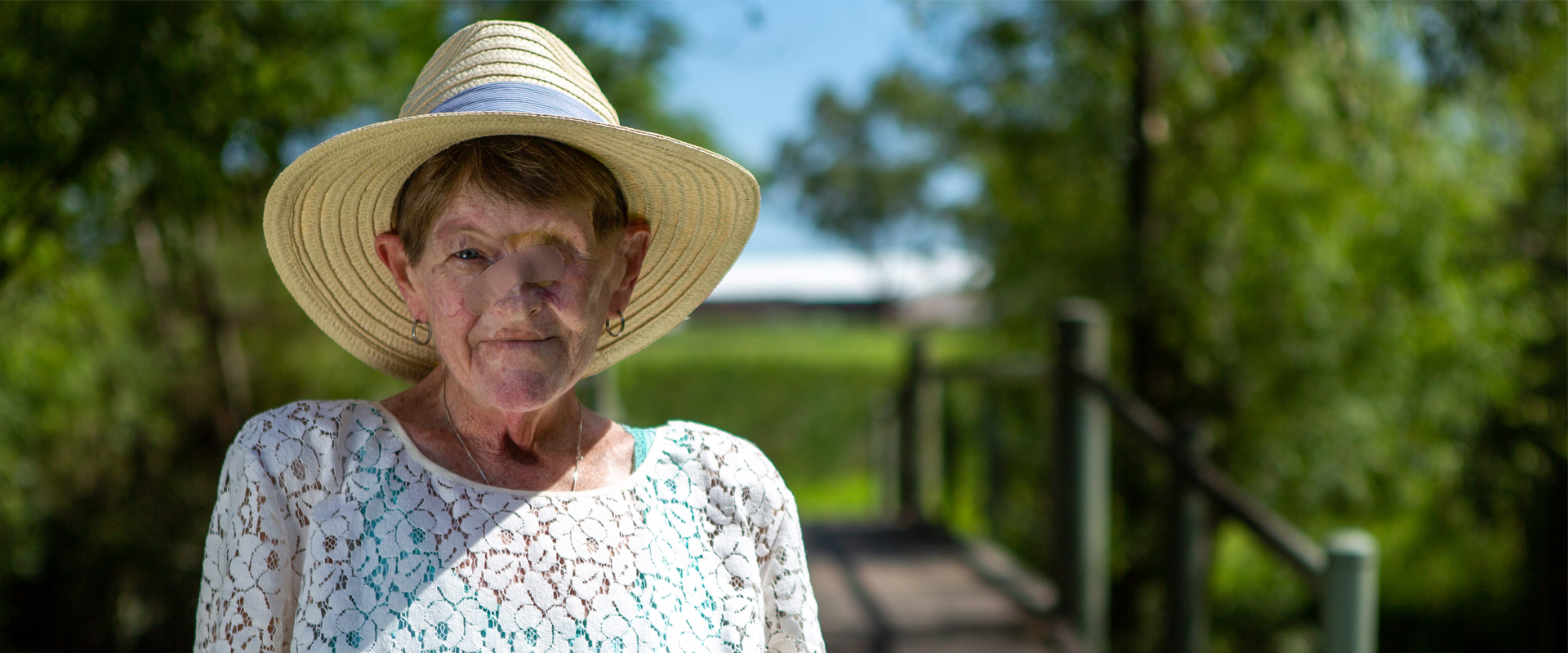
Sharon’s advanced CSCC spread to her optic nerve and sinuses.
Meet Laura
Like Sharon, Laura, who lives on the other side of the world, in Hamburg, Germany, was shocked to learn that what she thought was nothing more than an infected wound on her ear was actually an NMSC. She was diagnosed with advanced BCC at only 33 years old.4,7
“I went in for a short round of antibiotics, which ended up with: ‘You have skin cancer,’” says the pastry chef. “It had grown through all sorts. It was in my bones. It had grown into my ear and into my nose cartilage and my upper lip. It had definitely made itself at home.”
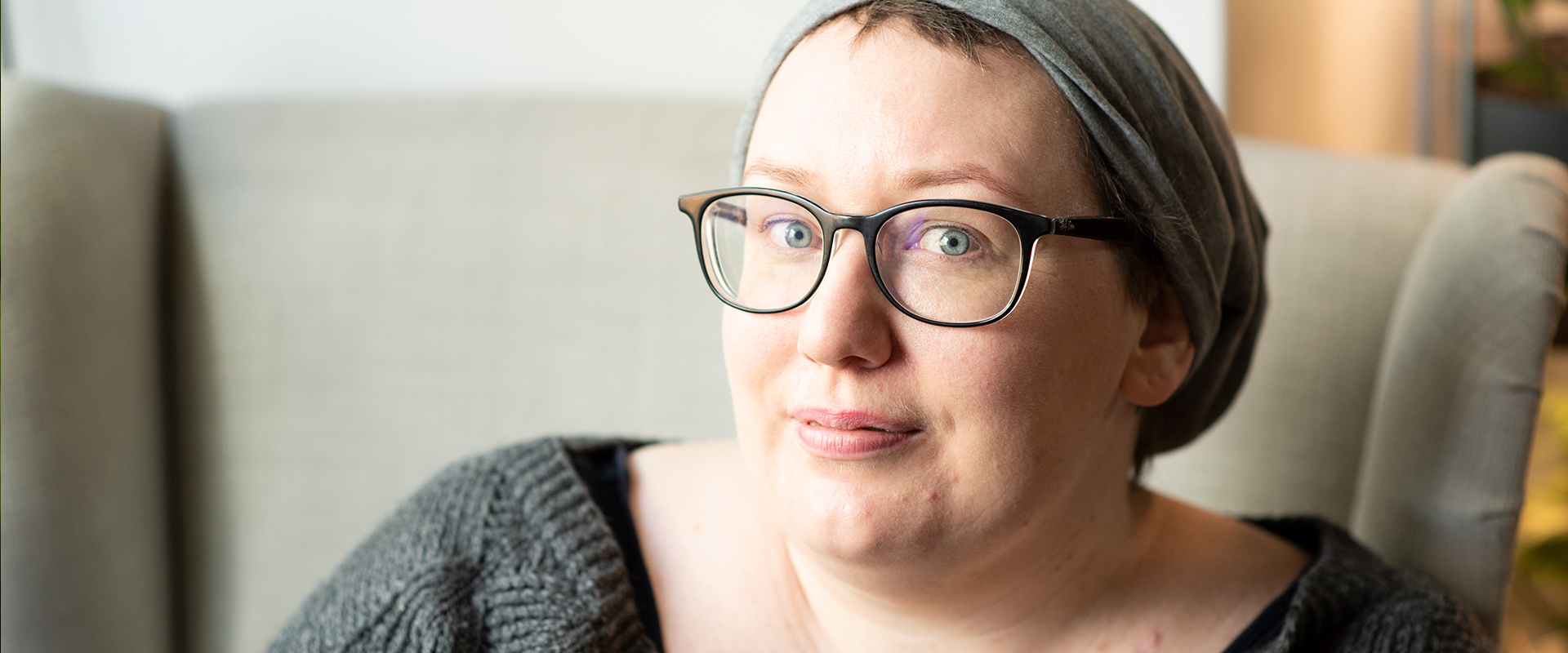
Laura’s advanced BCC spread to her nose, lip and bones.
Since skin cancer is more difficult to treat when it metastasizes, navigating the next steps can be daunting for people like Laura who receive such a diagnosis.4,8,9
Laura, whose cancer had gone undiagnosed for more than four years, saw multiple health care professionals after her diagnosis before being referred to a hospital where a specialized care plan was created for her.
Leaning on a multidisciplinary health care team was a key factor in Laura’s experience. Before committing to a treatment path for her advanced BCC case, her team took time to understand the complexities and scale of her condition.
Laura is thankful for her medical team and organizations bringing support and medical advances to people diagnosed with advanced NMSC around the world.
Incidence and mortality rates due to NMSC from around the world (per 100,000)3
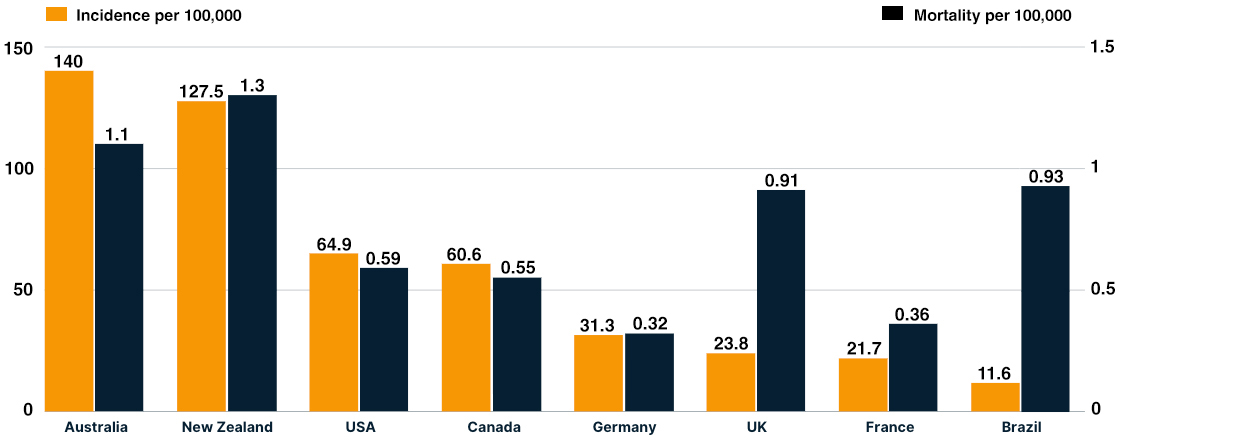
Less than 4% of BCC and CSCC cases become advanced.1
The caregivers’ journeys
Laura and Sharon, like many others, found invaluable strength from their support networks and loved ones. Today, nearly 88 percent of cancer caregivers are family members, facing the rigors of cancer head-on with their loved ones.10
I saw her strength and resilience and I am very proud of her. I’m really glad that my daughter still has a grandmother.
Bryhony
Sharon’s daughter
Sharon relied heavily on her family during treatment; however, she admits she feared the reaction from her adult children when she shared the news of her diagnosis. She needn’t have worried: They were with her every step of the way—particularly her daughter, Bryhony.
“Mum’s gone through a journey, and it happened so quick in the last few years,” Bryhony says. “I don’t think she liked losing her independence, but I saw her strength and resilience and I am very proud of her. I’m really glad that my daughter still has a grandmother—and she is a great role model.”
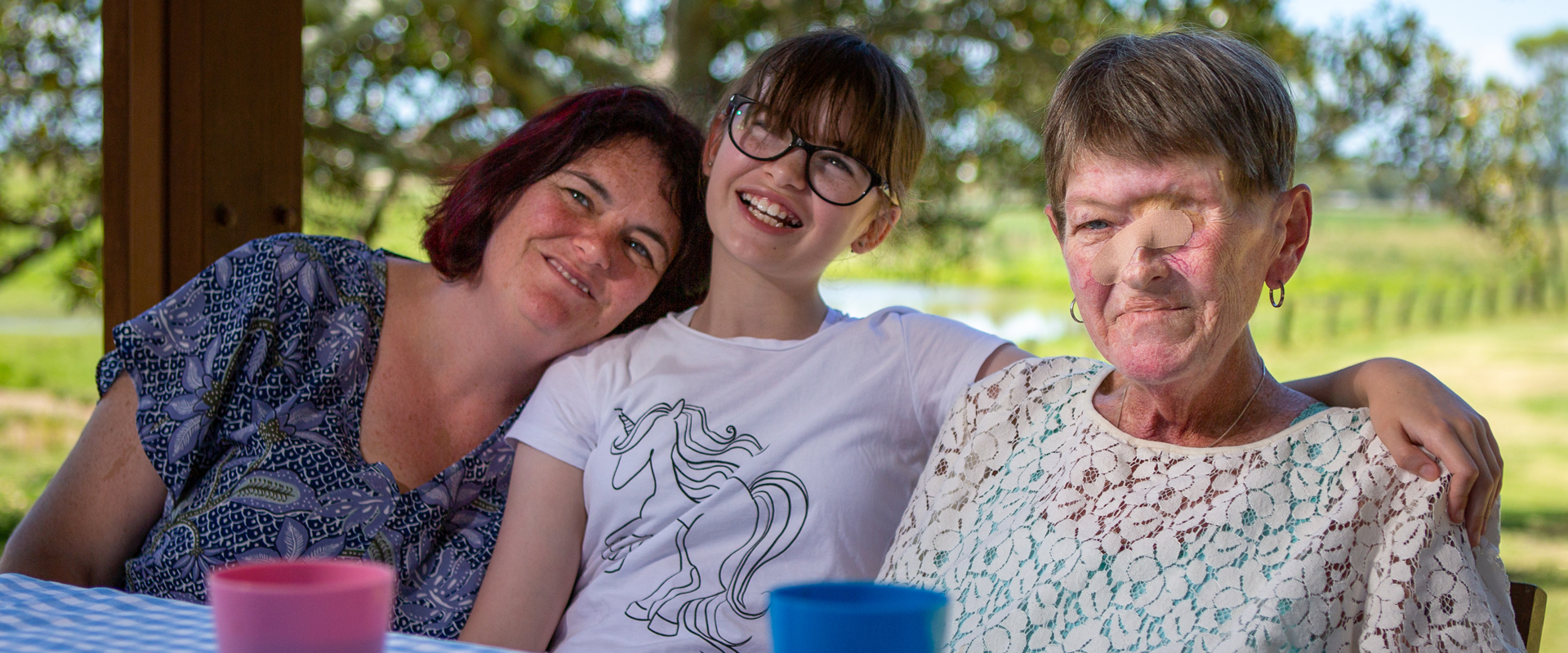
Sharon at home in Maitland, Australia, with her daughter, Bryhony, and granddaughter.
For Bryhony as well as Laura’s boyfriend, Simon, improved awareness has helped them successfully navigate their journey as caregivers. Ongoing research has led to new treatments for advanced BCC and advanced CSCC, providing more options for patients and their families.11
“It was a difficult time,” says Simon, who admits he was initially “steamrolled” by Laura’s diagnosis. “There are some gaps in awareness that need to be filled. I wish there was more education about the fact that this could happen to anyone.”
Being proactive about skin protection
Sharon and Laura live thousands of miles apart in different countries, but their stories highlight important lessons learned from their experiences with advanced BCC and advanced CSCC:
• Wear sunscreen and outdoor protection like hats and rash vests as a priority, not an afterthought.12
• Be on the lookout for new, changing or unusual spots on your skin.11,13
• Maintain a regular schedule of skin checks from a health care professional; early detection is key.14
• If diagnosed, work closely with your health care team to monitor and stay up to date on the latest research and developments.12
Sharon and Laura’s stories show that it’s important to be proactive regarding protection and treatment, and to find and draw support from a community of people who have gone through similar experiences.
For more information about advanced NMSCs, please visit saveyourskin.ca »
References
1. Samarasinghe V, Madan V, Nonmelanoma skin cancer. J Cutan Aesthet Surg 2012;(1): 3-10
2. Apalla Z, et al. Epidemiological trends in skin cancer. Dermatol Pract Concept 2017;7(2): 1
3. World Cancer Research Fund International. Cancer Trends. Available at:
https://www.wcrf.org/cancer-trends/
4. Migden M, Chang A, et al., Emerging trends in the treatment of advanced basal cell carcinoma, Cancer Treat Rev 2018; 1-10
5. Thai, A.A. et al. Biology and Treatment Advances in CSCC. Cancers 2021;13(22): 5645
6.. Romana Č, Mikela P, et al., Nonsurgical treatment of nonmelanoma skin cancer in the mature patient, Clinics in Dermatology 2018; 177-187
7.Ciążyńska M, Kamińska-Winciorek G, et al, The incidence and clinical analysis of non-melanoma skin cancer, Scientific Reports 2021; 18
8. Cancer.Net. Skin Cancer (Non-melanoma): Introduction. Available at:
https://www.cancer.net/cancer-types/skin-cancer-non-melanoma/introduction
9. National Comprehensive Cancer Network. NCCN BCC Guidelines Version 2.2022
10. National Alliance for Caregiving. Cancer Caregiving in the U.S. 2016
11. Cancer.Net. Skin Cancer (Non-melanoma): Latest Research. Available at:
https://www.cancer.net/cancer-types/skin-cancer-non-melanoma/latest-research
12.. Skcin. Non-Melanoma Skin Cancers. Available at:
https://www.skcin.org/typesOfSkinCancer/NonMelanomaSkinCancers.htm
13. Cancer.Net. Skin Cancer (Non-melanoma): Symptoms and Signs. Available at:
https://www.cancer.net/cancer-types/skin-cancer-non-melanoma/symptoms-and-signs
14. Cancer.Net. Skin Cancer (Non-melanoma): Screening. Available at:
https://www.cancer.net/cancer-types/skin-cancer-non-melanoma/screening
Produced by Reuters Plus for Regeneron and Sanofi: MAT-GLB-2204805.v1 03/23