Published: March 8, 2023
The science and global standards behind Fukushima’s ALPS treated water

After years of painstaking research, testing and working with partners from around the world, water that has been treated and purified to remove contaminants is now ready to be discharged from the TEPCO Fukushima Daiichi Nuclear Power Station.
The plan to gradually discharge the purified and much-diluted water into the sea has the support of nuclear energy experts and scientists as the most appropriate course of action. The procedure will also serve as a milestone in the decommissioning of the nuclear power station and the broader recovery of north-east Japan after it was devastated by the March 11, 2011, earthquake and tsunami.
Since the worst natural disaster in living memory in Japan, the government has worked tirelessly to help those impacted by the tragedy and rebuild the areas affected. These measures have included stabilizing the nuclear power plant and removing contaminated materials. That campaign has been so successful that many people who were initially evacuated have now been able to return to their communities.
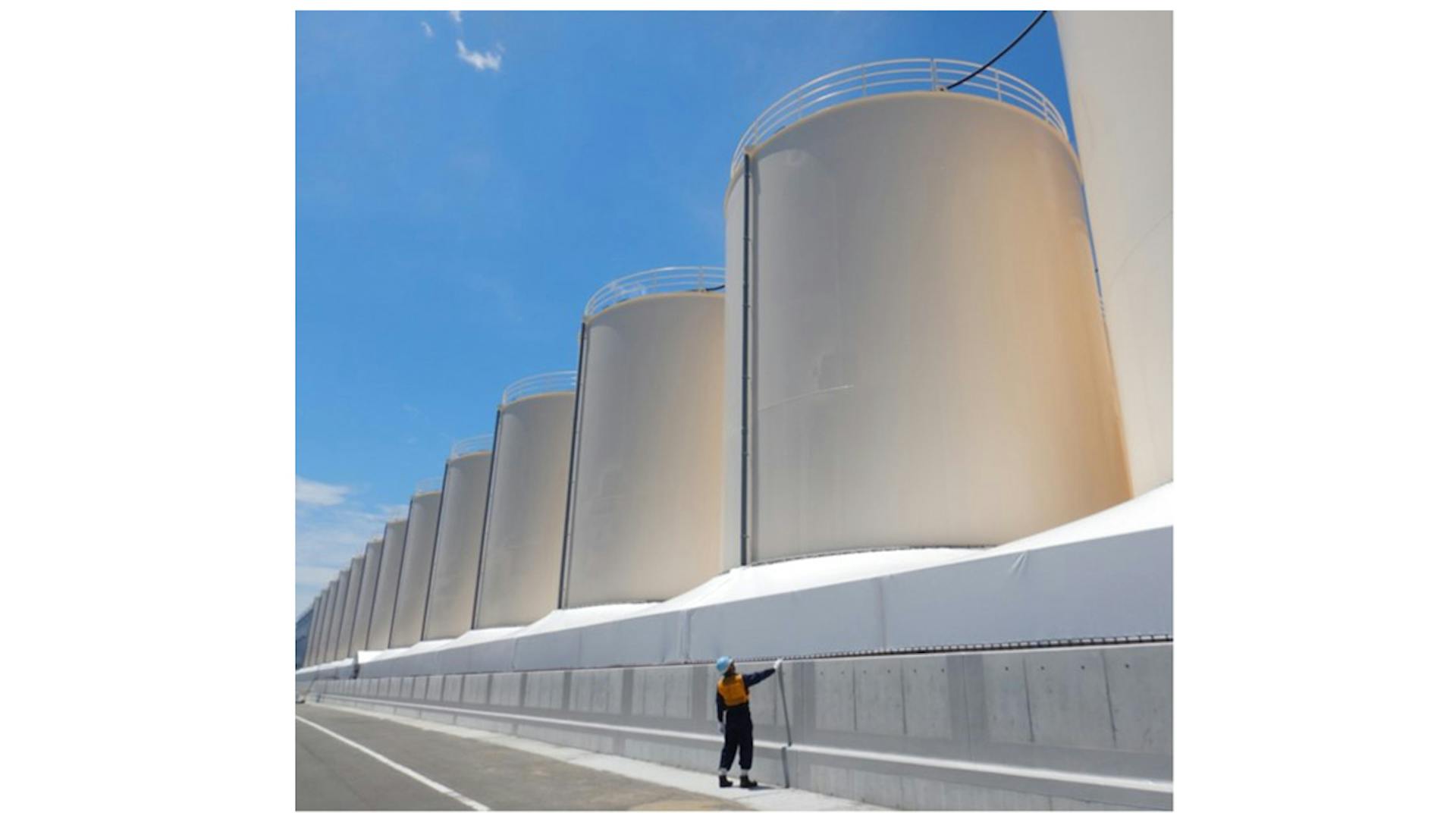
Decommissioning work at the nuclear power station has continued, although this has resulted in vast amounts of water used to cool the damaged reactors building up in storage tanks at the site.
Fortunately, technology to treat this water has been deployed at the plant. The Advanced Liquid Processing System (ALPS) can reduce levels for virtually all radioactive materials in contaminated water to below stipulated regulatory standards, except for tritium which requires further treatment. (1)
The science
Proposals to discharge the purified water from the nuclear power station have been controversial, but the Japanese government has consistently prioritized human health and the global environment. ALPS is a state-of-the-art filtering system that removes 62 different radioactive materials from the contaminated water, leaving only tritium. (2)The radiation emitted by tritium is very weak— it can be blocked by a single sheet of paper—and it does not accumulate in the human body. (3)
At nuclear facilities around the world, it is standard practice for operators to discharge water containing tritium into rivers and oceans, in compliance with local laws and regulations. (4) A number of studies have determined it has minimal impact on the environment or human health, even in cases of accidental discharge of large amounts of water containing tritium. (5)
“It is important to understand this is global standard practice,” said Paul Dickman, senior policy fellow focusing on nuclear energy at the Argonne National Laboratory in the US.
“Nuclear reactors produce tritium and releasing tiny amounts into the air or into the water is the optimum way of managing it,” he said, adding that there will be no impact on the wider environment, “because the plan approved by the Japanese Nuclear Safety Authority takes a comprehensive, engineered approach to ensuring the treated waters will not contain any harmful levels of radioactive materials.”
An assessment by Tokyo Electric Power Co (TEPCO), the operator of the power station, which has been reviewed by the International Atomic Energy Agency (IAEA), suggests the exposure level from water discharged from the nuclear power station will be as little as 0.0001 milliSieverts a year. (6) Average annual background radiation in Japan is 2.1 mSv. (7)
“Anything that contains water will also contain tritium, and always has,” said Dickman. “The human body, the food we eat, the air and oceans all contain tritium because it is produced in nature.
“Over the millions of years that life evolved on the earth, tritium and many other radioactive substances have been part of our natural environment,” he said. “The approach taken in managing the treated water releases are to limit any discharges to nearly the same as those that already occur in nature and well below any harmful level.”

Accepted practice
Water containing tritium has been regularly discharged from nuclear power plants around the world for many years. These discharges have consistently been determined to pose no danger to the environment or human health.
Annually up to 22 trillion Becquerels of tritium will be gradually discharged from TEPCO’s Fukushima plant over the coming decades,(8) far less than the amounts discharged by many other nuclear facilities, including in Europe, North America and other parts of Asia. (9)
After ALPS treatment and further dilution, the water discharged from TEPCO’s Fukushima plant will contain no more than 1,500 Becquerels of tritium per liter of water. This is well below Japan’s regulatory standard for tritium in water of 60,000 Bcq/l (10), a limit based on international recommendations. In fact, the level in the water to be discharged from the nuclear power station is even below the World Health Organization’s (WHO) suggested maximum amount for tritium in drinking water, which is set at 10,000 Bcq/l. (11) In addition, discharges from the TEPCO Fukushima plant will continue to be closely monitored and corroborated by the IAEA.
“It must be repeated that this release has no impact on health and the environment and is a global standard used by many nuclear countries in the world,” said Dr Vincent Gorgues, senior advisor to the strategic director of France’s Dismantling and Decommissioning Commissariat at L’Energie Atomique et aux Energies Alternatives (CEA).
Alternative methods of disposing of the accumulated water, such as evaporation, are “not credible,” Gorgues said, adding that other nations’ nuclear energy sectors have long been safely discharging tritium into sea with no impact on human health.
Jim Smith, a professor of environmental science at the University of Portsmouth in the UK, agrees that as virtually all the radioactivity has been eliminated from the water, there will be no significant impact.
“Tritiated water in the release will be at levels lower than the WHO drinking water limit for tritium, and it will further dilute in the ocean,” he pointed out. “Tritiated water does not bioaccumulate in organisms and tritium has a very weak radiation emission. Other radionuclides will be treated so they are below Japan's very cautious regulatory limits. So, doses to people and aquatic organisms will be very low.” Prof. Smith says concern about the safety of the water is misplaced.
“I think the opposition to the release of water from Fukushima is partly an understandable concern by the fishing industry because it might - unfairly - damage their reputation for quality,” he suggested. “But I think it is also partly motivated by those who are opposed to nuclear power production and want to make people scared about radiation. Of course, we need to be careful about radiation … but we need to focus on the science and not create what I think are misleading scare stories.”
International support
Since the earliest days of the crisis, the Japanese government has worked closely with experts from around the world and nuclear energy organizations that place safety at the very core of what they do.
Committed to protecting the environment and public health, the Japanese government has explored every possible avenue before concluding that rigorous treatment of the water, dilution and then discharge into the sea is the most appropriate solution to the build-up of water at TEPCO’s Fukushima site.
Dr Mike Weightman, an independent nuclear consultant with MWA Ltd and previous non-executive director of the UK’s National Nuclear Laboratory, emphasized the impact on the environment will be, “so very low as to be unmeasurable.”
“In line with the best practice of scientific decisions, it has been subject to rigorous open expert assessment and review, independent regulatory assessment and international expert body involvement and standards,” he added. “Additionally, its implementation will be similarly subject to independent monitoring, assessment and reporting.”
Japan’s plan has been reviewed by the IAEA, which has convened an independent panel to verify the safety of water that has been treated by ALPS before it is discharged into the sea. The panel is also monitoring regulatory activities and processes and will carry out independent sampling and analysis to corroborate Japanese data.
Based on its findings, the IAEA has reviewed TEPCO’s plan to discharge the ALPS treated water, to confirm it is in compliance with international practice.
Rafael Mariano Grossi, Director General of the IAEA, described the decision as a “milestone that will help pave the way for continued progress in the decommissioning,” of the plant. (12)
Emphasizing that the decision is in line with practice globally, Grossi vowed that the IAEA, “will work closely with Japan before, during and after the discharge.”
“Our cooperation and our presence will help build confidence – in Japan and beyond – that the water disposal is carried out without an adverse impact on human health and the environment.”
After another visit to Japan in May 2022 for an update on the situation at the plant, Grossi declared in a Twitter message that the release “will be done in full conformity with the international standards and therefore it will not cause any harm to the environment.” (13)
Ocean release: The best course of action
As Japan edges ever closer to the full rebuilding and recovery of areas devastated by the March 2011 earthquake and tsunami, misconceptions continue to cloud the most effective way of discharging the treated water from TEPCO’s Fukushima Daiichi Nuclear Power Station.
After applying the most rigorous standards and prioritizing consideration for the natural environment, Japan has concluded that the careful, gradual and transparent release of the accumulated water into the ocean is the most appropriate course of action.
(1) - https://www.meti.go.jp/english/earthquake/nuclear/decommissioning/atw.html
(2) - https://www.enecho.meti.go.jp/about/special/johoteikyo/osensuitaisaku01.html
(3) - https://www.tepco.co.jp/en/decommission/progress/watertreatment/images/20210428.pdf
(4) – https://www.nrc.gov/reactors/operating/ops-experience/tritium/faqs.html
(5) - https://www.ncbi.nlm.nih.gov/pmc/articles/PMC3057633/
(6) - https://fpcj.jp/wp/wp-content/uploads/2022/03/b62bf2a4183514ac0771bb2b57232661.pdf
(7) - https://www.env.go.jp/en/chemi/rhm/basic-info/1st/02-05-03.html
(8) - https://www.meti.go.jp/english/earthquake/nuclear/decommissioning/qa.html
(9) - https://www-pub.iaea.org/MTCD/publications/PDF/TRS421_web.pdf
(10) - https://www.meti.go.jp/english/earthquake/nuclear/decommissioning/qa.html
(11) - https://www.meti.go.jp/english/earthquake/nuclear/decommissioning/pdf/202104_bp_breifing.pdf
(12) - https://www.iaea.org/newscenter/pressreleases/iaea-ready-to-support-japan-on-fukushima-water-disposal-director-general-grossi-says
(13) - https://twitter.com/rafaelmgrossi/status/1527206580709728256